
 Program Overview
 Tuition & Fees
 Dress Code
 Fall ’26 Mini-Mester
 DWL Mobile Program
 Tap
Tap Ballet
 Jazz
Jazz Lyrical/ Contemporary
 Hip Hop
 Acrobatics
 Studio Calendar
 Performance Opportunities
 Birthday Parties
 Resources
 News
News Member Stories
 Employment Opportunities
 Contact
If 2018–2019 was our “moment of stability,” the next two years were anything but. These were the years that stretched us, humbled us, and ultimately proved what Dance Without Limits was really made of.
Let’s start in the fall of 2019 — when everything felt possible.
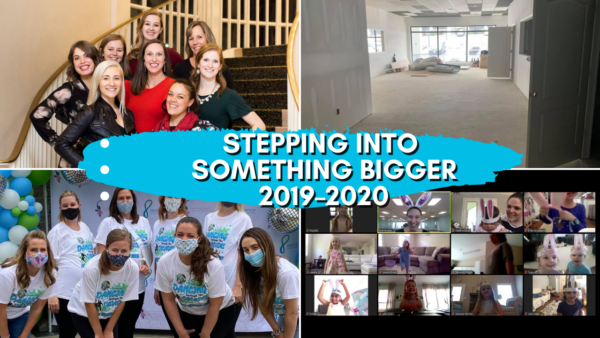
Year 4 (2019–2020): Stepping Into Something Bigger
“The fall of 2019 was our most successful season yet,” Beth remembers. “We had lots of dancers, expanding age groups, and more classes than ever. It felt like everything we had worked for was gaining momentum.”
With their lease ending in spring 2020, Beth began searching for a larger space. She toured property after property, looking for the right fit.
“I walked into what had been a karate studio — black ceilings, bamboo painted on the walls, just this big open space — and I knew immediately it was ours,” she said. “It had the same feel as our old studio. Lots of windows, sunlight, good parking. I could see it before it even existed.”
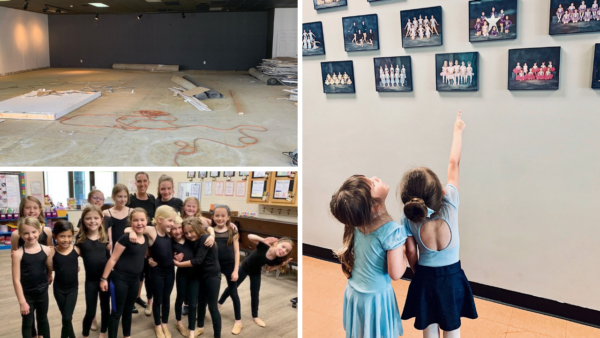
The lease was signed. Buildout began in January 2020.
That same season, DWL launched its Mobile Program, partnering first with Mitchell Road Christian Academy to offer a lyrical class. Beth also joined the Dance Studio Owner’s Association Inner Circle, connecting with studio owners from across the country.
“I didn’t know at the time how much I would need that community,” she says now.
By March 2020, everything changed.
“Because of studio owners I knew in California and Washington, I was already watching what they were doing. I knew what was coming before it really got here. So when everything shut down, we had a plan.”
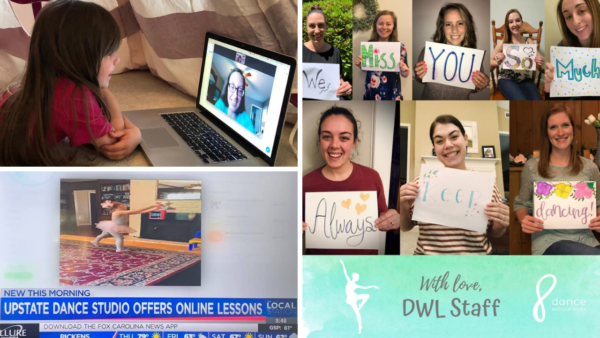
After two weeks closed, DWL moved entirely online — 45 classes a week, 350 dancers on Zoom.
“We kept our regular schedule. Teachers taught from the studio at first. It felt important to keep things as normal as possible.”
But “normal” quickly became creative.
There were virtual talent shows, birthday parties, storytimes, pen pals, hangouts with Mrs. Beth, a virtual Dancing Egg Hunt, and a weekly “Twinkle Bear Goes to Ballet” for the community. Care packages filled with letters, coloring sheets, stickers, friendship bracelets, and t-shirts went out to dancers’ homes. DWL was even featured on Fox News for its online classes.
And meanwhile, construction delays hit.
“Our lease expired at the old studio, and the new one wasn’t finished. For two months, we were basically homeless,” Beth laughs. “I had a trailer in my driveway. Everything the studio owned was either in my garage or sitting outside.”
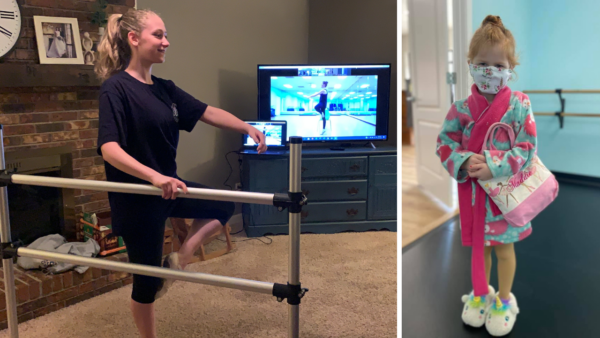
Teachers taught from their homes. Tap floors were built from plywood by very patient husbands. Kids were doing virtual school at the kitchen table while moms ran dance classes from the living room.
“There was no time to sit and feel overwhelmed,” Beth says. “It was just — what’s the next thing we need to solve?”
Finally, in June 2020 — three months later than planned — the studio buildout was complete. Camps were scheduled to begin on a Monday, and the city granted clearance to open at 5 p.m. the Friday before.
“We were getting the studio dancer-ready up until the night before camp started. It was crazy,” she remembers.
That summer was socially distanced, heavily sanitized, and full of gratitude.
“We printed shirts that said, ‘We are the rainbow after the storm,’” Beth says. “And that’s exactly what it felt like. We went through a storm. But the community that came out of it was beautiful.”
Year 5 (2020–2021): Starting Over
If Year 4 was survival mode, Year 5 was rebuilding.
“In January 2020, we had 350 students in a one-room studio,” Beth explains. “By August 2020, we had 99 students in a brand-new three-room space. We didn’t even finish building out one of the studios because we didn’t have the funds — and we didn’t need it.”
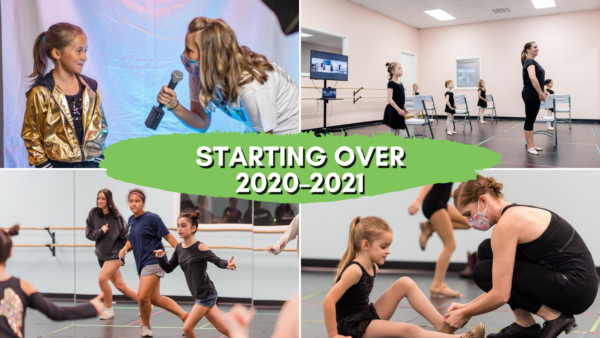
Classes resumed with strict precautions. Floors were taped into six-foot squares — affectionately called “dancing castles.”
“The kids stayed in their castles the entire class,” Beth says. “Each side was a different color of tape, so we’d say, ‘Chassé to your pink line!’ It became part of the fun.”
Twinkle dancers had individual prop kits with their own bear, tiara, wand, and scarf. Ballet students used chairs as personal barres. Everyone — dancers and teachers — wore masks.
Parents waited outside.
“We would meet dancers at the door, walk them in, and walk them back out after class. That’s when we first invested in live streaming so parents could watch from their cars.”
Studios were cleaned after every class with CDC-approved products. Hand sanitizer was everywhere. Zoom classes remained available, with TVs on rolling stands so at-home dancers could move “through” the classroom.
Yet some programs paused entirely. “We couldn’t teach Acro. We couldn’t spot skills. That was hard.”
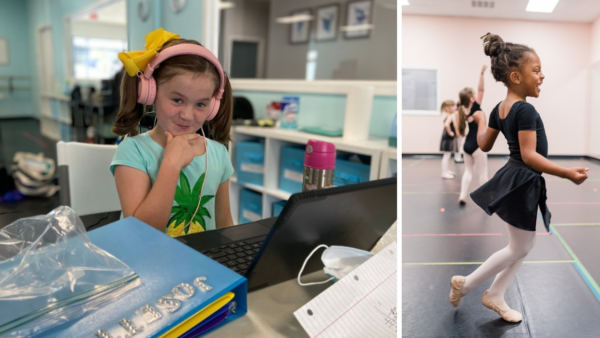
But once again, we pivoted. “With schools fully virtual, we had this brand-new space sitting empty during the day,” Beth explains. “So we created a Fine Arts Club.”
Students came from 8 a.m. to 3 p.m., completing schoolwork with staff support and participating in daily arts classes. DWL secured state permits to operate as temporary childcare and partnered with local organizations to bring in music, theatre, and art instruction.
“I was also traveling to daycares and churches teaching dance to kids doing virtual school there,” Beth says. “We just kept asking — how can we help?”
Performances looked different, too.
Winter Showcase became small in-class presentations with two audience members per dancer. By spring, limited gatherings were allowed, and the Spring Showcase was held at Springwell Church in multiple mini-shows.
Each dancer brought two guests. Pods were spaced apart. Dancing squares were taped onstage.
“We couldn’t put everyone on stage together,” Beth says. “So each class did the finale on their own. I have never heard ‘We Are Family’ so many times in one day in my life.”
Just Keep Going
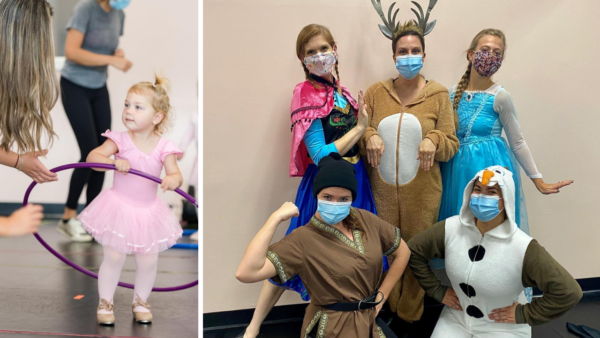
“Looking back, it’s wild,” Beth reflects. “It’s such a blur. We didn’t have time to be exhausted or discouraged. It was just — get the next thing done.”
At home, her three children were navigating virtual school. The staff showed up, fully committed. Fellow studio owners from across the country became sounding boards and lifelines.
“Quitting wasn’t an option,” she says simply. “Closing wasn’t an option. We just had to figure it out.”
And we did.
What began as years defined by uncertainty became years defined by resilience. Because in the end, Dance Without Limits was never just about dance.
It was about showing up — for each other — no matter what.